


How to Make a Military Camouflage Net: All the Tips to Make One
Today, with the technological advancement of weapons and military equipment, making a camouflage net is an essential task. It is therefore crucial to know how to build an effective camouflage net that can blend perfectly into its surroundings. In this article, discover how to make a military camouflage net with all the advice and tips needed for a successful setup!
To make a camouflage net, you will need:
-
Camouflage material suited to the environment where you plan to use the net (for example, green for the forest, sand for the desert, etc.). You can buy camouflage fabric or use branches, leaves, and other natural materials to create a homemade net.
-
Scissors to cut the fabric or the branches and leaves.
-
String or wire to hold the net in place.
Here are the steps to follow to make a camouflage net:
-
Decide on the size and shape you want for your net. Depending on its intended use, you can choose a small and light net or a larger and sturdier one.
-
Cut the fabric or the branches and leaves into pieces of the desired size and shape.
-
Arrange the camouflage pieces to cover the desired surface. You can use random patterns or follow a precise design according to your preferences.
-
Tie the camouflage pieces together using string or wire to keep the net in place. You can use knots or staples to secure the net.
-
If you wish, you can add accessories such as branches, leaves, or flowers to enhance the camouflage effect.
It is important to note that the camouflage net should not be used to deliberately hide your presence in a place where you are not supposed to be. It is mainly used to conceal oneself during hunting, hiking, or other outdoor activities.
What Is a Camouflage Net?
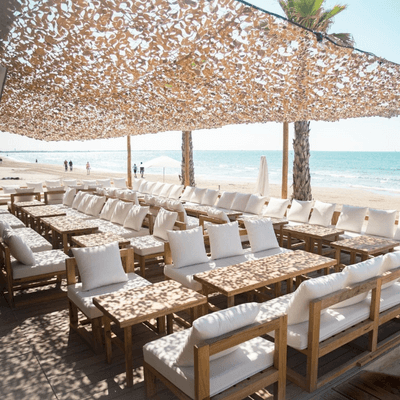
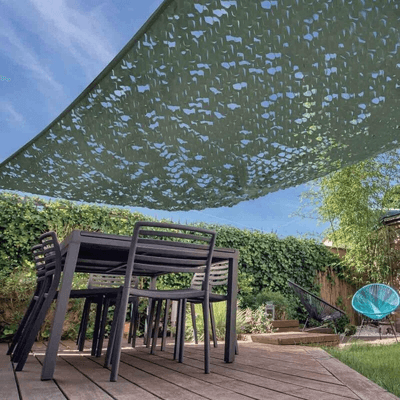
A camouflage net is a fabric used to conceal the environment. It is used for military purposes but can also be an interesting decoration for your patio, garden, or terrace. It can be installed on a wall or on a pergola, adding an original touch to your outdoor space. There are several types of camouflage nets available on the market with various designs that can suit different uses.
START WITH THE NET
The net is the foundation of this project, and it must be of good quality. If you live in an area where commercial fishing is common, you might be able to get leftover nets for free. If you are not near the sea, go to a craft store and buy a decorative fishing net. These nets are usually large enough to make a decent fishing net, of suitable color (that is, dark) and reasonably priced. You can also weave your own net if you have the time and plenty of fine cord.
Anyone familiar with the art of camouflage probably knows about camouflage suits. These are garments covered with shredded fabric, rags, and/or natural materials that provide excellent concealment thanks to their colors, textures, patterns, shapes, and naturally blurred edges. Full suits, often used by military snipers, take a long time to make, but a quicker version can be assembled from a net and the same raw materials. This net can be used as a cover for people and equipment, and it adapts easily to different environments. A hunting net is also the perfect complement to your spring hunting outfit.
ORIGINS OF THE CAMOUFLAGE SUIT
Anyone familiar with the art of camouflage knows about camouflage suits. These are garments covered with shredded fabric, rags, and/or natural materials that provide excellent concealment thanks to their colors, textures, patterns, shapes, and naturally blurred edges. Full suits, often used by military snipers, take a long time to make, but a quicker version can be assembled from a net and the same raw materials. This net can be used as a cover for people and equipment, and it adapts easily to different environments. A hunting net is also the perfect complement to your spring hunting outfit. To stay hidden from animals and poachers, hunters covered themselves with tartan patterns in the natural colors of their traditional kilts, sometimes covered with extra vegetation. These kilts were probably the first camouflage fabric garments in the world, which eventually gave us the ghillie suit. Each family or clan’s kilt had its own colors and patterns, produced from natural plant and mineral dyes. These classic irregular plaid patterns, made up of blue, green, yellow, brown, and black threads, were woven into the kilt fabric, thus creating camouflaged “covers” dyed with the colors of the native vegetation.
START WITH THE NET
The net is the foundation of this project, and it must be of good quality. If you live in an area where commercial fishing is common, you might be able to get leftover nets for free. If you are not near the sea, go to a craft store and buy a decorative fishing net. These nets are usually large enough to make a decent fishing net, of suitable color (that is, dark) and reasonably priced. You can also weave your own net if you have the time and plenty of fine cord.
CUT THE STRIPS
While you are at the craft store, you can also buy burlap. The natural light brown color is perfect, but the store may offer a choice of colors. Choose several yards of fabric matching the colors of the environment where you will use the camouflage. Other fabrics can also be used, but burlap can be shredded to produce a remarkable visual effect. For a camouflage net to be used in snowy conditions, use an old white sheet or several white t-shirts. Cut the burlap or other fabric into strips one foot long and 2 to 3 inches wide.
KNOT
Tie the knot
Once you have your strips, attach them to the net every two inches in all directions. Make a flat knot and simply tie one end of each strip to the net. The burlap strips can be separated and shredded for an even more blurred look. If you attach leaves, use a strong dark thread to tie the stem of each leaf to the net. This tip is probably obvious, but you only need to attach your materials to one side of the net, since the other side will be hidden. You can also add a bit of string to two corners of the net, which can be tied together so the net can be worn like a cape. You can also sew a zippered pouch to serve as a pocket. If you are concerned about smells, keep your net in a bin of earth and dry leaves so it can absorb these natural odors as a cover scent. You can also use a scent-eliminating spray.
ADD NATURAL MATERIALS
The soft and flexible inner bark strips of trees (butterfly, tulip poplar, cedar, and many others) can replace burlap strips, but for best results, use them in addition to burlap. As I live in the eastern forests, I am also a big fan of sturdy dead leaves. Gather them in autumn or winter before they decompose too much. As mentioned earlier, leaves must be tied to the net with thread in the net. If your net is to be used in grassy areas, you can also add raffia, which is durable and resembles dead grass blades. Keep a spool of thread in the pocket you sewed on the net so you can quickly add extra material in the field. The only thing stopping you from making your net perfectly matched is your attention to detail. Pay close attention to the colors, textures, and shapes around you.
httpswww.outdoorlife.comsitesoutdoorlife.comfilesimport2015201503repair.JPG
Repair any tears
The thread you keep for attaching extra material can also come to your aid for repairs. Use square knots and good strong ties to join cut or torn sections of the net, or to join two nets together for larger camouflage panels.
USING THE NET
The easiest way is to use the escape-proof net. Just throw it over a box of equipment, like here over a shiny black plastic bin. You can also drape it around your shoulders when tracking, or lay it over your knees when waiting for a turkey. The uses are many, and the net outperforms anything I have ever used. Once, while teaching a survival course, I lay down in a low spot and covered myself with a well-made ghillie net. My friend told a young man to go get me and pointed to my exact hiding place. The young man saw nothing but a small pile of leaves on the forest floor, which he began to strike. To our mutual surprise, he kicked me on the top of my head while I was lying down. I jumped up (as if I had sprung from flat ground) with a loud yell, and the young man nearly wet himself. Today there are a number of camouflage garments on the market with shaggy edges and blurred outlines, but few clothes can match the shapes, patterns, and blurred edges of a good homemade camouflage net.
There are many camouflage products for sale on the market, but few garments can rival a good homemade ghillie suit.
How to Choose Good Fabric for Your Project?
When choosing a camouflage net, make sure the fabric is of superior quality. Most often, the camouflage net is made from a special weather-resistant polyester. Some fabrics are designed to be soft and supple to withstand strong winds and rain. Colors and patterns are also very important: muted tones and subtle blends are preferred for good camouflage quality.
What Is the Optimal Size for a Camouflage Net?
The ideal size of a camouflage net will depend on its intended use. For example, a net for the garden will be smaller than one for an army, while measurements adapted to each environment will ensure the best possible result. It is important to consider the available space and the particular characteristics of the materials used; for example, you may need a special cut or several sides to properly secure the net to its support.
What Are the Best Installation Methods?
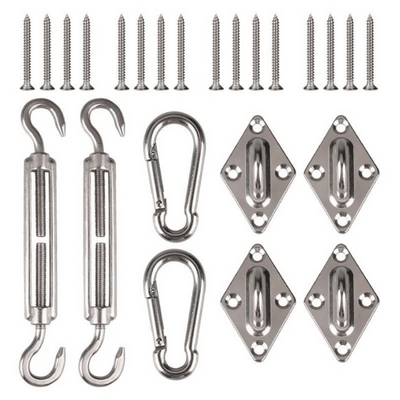
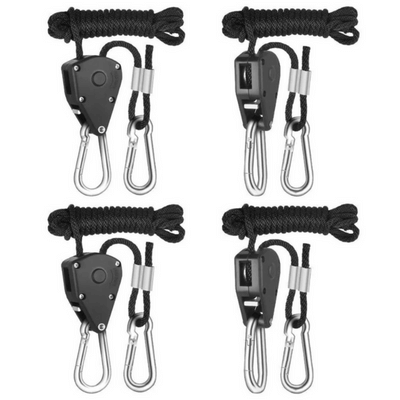
There are different ways to install a camouflage net, depending on its purpose (indoors or outdoors) and the accessories you have. For indoor use, a thick and sturdy cord is appropriate; outdoors, fasteners and ropes are better suited. In all cases, for optimal installation it is important to follow the instructions provided by the manufacturer. Once the net has been secured with suitable equipment, it is time to ensure it does not move or tear in strong winds.
How to Make a Camouflage Net?
To make a sturdy camouflage net, it is best to take a strong fishing net as well as a durable fabric and firmly attach them together using cable ties or steel crimps. The camouflage net is an excellent way to conceal specific surroundings and add an original touch to your outdoor space. For the best result, you must choose good material suited to the purpose and local weather conditions. Finally, proper installation using the recommended fastenings will ensure your camouflage net stays in place and offers optimal protection for the environment you need. At The Camouflage Net we nevertheless offer camouflage nets ready to use upon receipt.

Leave a comment
All comments are moderated before being published.
This site is protected by hCaptcha and the hCaptcha Privacy Policy and Terms of Service apply.